
Discovering wasps around your home can quickly become a concern, especially when you notice them repeatedly flying in and out of the same area. Many homeowners ignore early warning signs because they are unsure whether they are dealing with a small insect problem or an active nest that could become dangerous.
Proper identifying wasp nests helps homeowners recognize potential infestations early and take the right steps before the problem grows. Wasps can build nests in hidden areas such as roof spaces, wall cavities, sheds, decks, and outdoor structures, making them difficult to detect without careful inspection.
In this guide, we will explain how to identify wasp nests, common signs of infestation, why professional removal is important, and how homeowners can protect their property from future wasp problems.
Why Identifying Wasp Nests Early Is Important
Wasps are beneficial insects because they help control other pests in nature. However, when they create nests close to residential areas, they can become a safety concern.
A small wasp nest can grow significantly during warmer months, increasing the number of insects around your property.
Early identification helps homeowners:
- Prevent larger infestations
- Reduce the risk of stings
- Protect children and pets
- Avoid damage to property structures
- Choose the right removal solution
Ignoring a growing nest can make removal more complicated and increase safety risks.
Common Places Where Wasps Build Nests
Wasps are highly adaptable and can build nests in many locations around residential properties.
Common nesting areas include:
Roof Edges and Eaves
Roof areas provide protection from weather conditions and are often quiet places for wasps to create nests.
Homeowners should regularly inspect:
- Roof corners
- Under roof edges
- Gutters
- Exterior walls
Garages and Sheds
Outdoor storage areas provide shelter and limited disturbance, making them attractive nesting locations.
Check:
- Ceiling corners
- Behind stored items
- Wall openings
Decks and Outdoor Structures
Wasps often build nests underneath decks, patios, and outdoor furniture because these areas provide protection.
Wall Cavities
Some wasp species create hidden nests inside walls. Increased insect activity around a specific area may indicate a hidden colony.
How to Identify a Wasp Nest
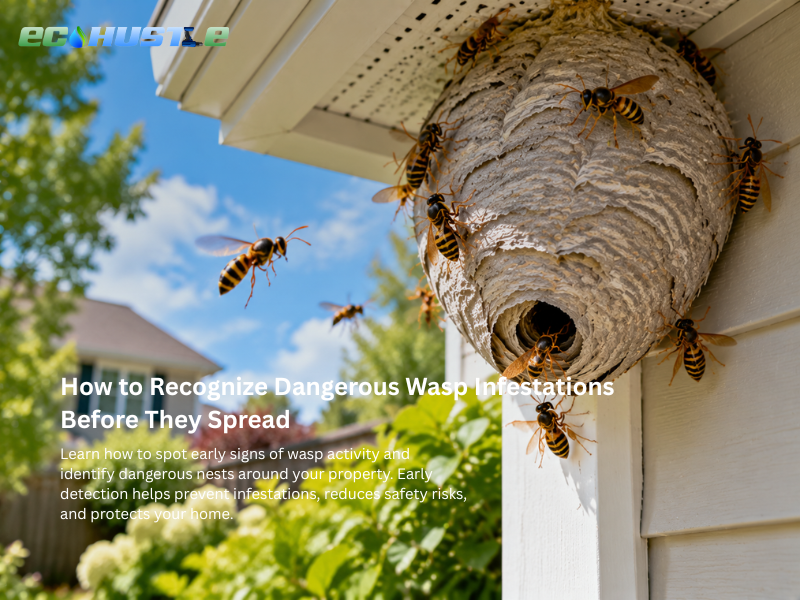
Knowing what a wasp nest looks like can help homeowners recognize the problem before it becomes serious.
Typical wasp nests may have:
- Paper-like texture
- Gray or brown coloring
- Round or oval shape
- Layered appearance
- Visible insect activity nearby
Unlike bee hives, wasp nests are not made from wax. They are created using plant fibers and saliva, giving them a paper-like appearance.
If you discover a suspicious nest, avoid touching or disturbing it.
Signs You May Have a Wasp Infestation
Sometimes the nest itself is hidden, but wasp activity can reveal that a problem exists.
Common warning signs include:
Increased Wasp Activity
Seeing multiple wasps repeatedly entering and leaving the same location often indicates an active nest nearby.
Aggressive Behavior
Wasps become defensive when protecting their colony. If they become aggressive around certain areas, there may be a nest close by.
Buzzing Sounds
Hearing buzzing from walls, ceilings, or hidden outdoor spaces may indicate a nest inside a structure.
Visible Nest Growth
Wasp colonies can expand quickly, especially during spring and summer.
Early action can prevent the infestation from becoming more difficult to manage.
Why DIY Wasp Nest Removal Can Be Risky
Many homeowners attempt to remove wasp nests themselves after discovering them. However, this can create serious safety issues.
DIY removal may result in:
- Multiple wasp stings
- Aggressive colony attacks
- Incomplete nest removal
- Hidden nests being missed
Wasps release warning signals when their nest is threatened, causing other wasps to become defensive.
For this reason, professional assistance is often the safer option.
Professional Wasp Removal Services for Homes
When dealing with an active infestation, experienced professionals can safely inspect and remove the problem.
Homeowners searching for Wasp Nest Removal Services Near Me usually need help with:
- Active nests near living areas
- Large colonies
- Hidden nests
- Difficult-to-reach locations
Professional pest specialists use proper equipment and treatment methods to manage infestations safely.
Emergency Wasp Nest Removal Services
Some wasp situations require immediate attention, especially when nests are located near entrances, playgrounds, or areas where people frequently spend time.
Emergency Wasp Nest Removal Services are useful when:
- Wasps are entering your home
- A nest is growing quickly
- Family members are at risk
- The nest is located in a high-traffic area
Quick professional action helps reduce the chance of injuries and prevents the colony from spreading.
Fast Wasp Infestation Control Services
Wasp colonies can expand quickly during warmer seasons. Delaying treatment may allow the problem to become larger.
Fast Wasp Infestation Control Services help homeowners address active problems before they become severe.
Professional control methods may include:
- Property inspection
- Nest identification
- Targeted treatment
- Safe nest removal
- Prevention recommendations
A complete approach focuses on removing the current infestation and reducing future risks.
Backyard Wasp Removal Solutions
Backyards are common areas where wasps create nests because they provide shelter and food sources.
A Backyard Wasp Removal Service Near Me can help homeowners safely manage nests found around:
- Gardens
- Decks
- Fences
- Outdoor seating areas
- Sheds
Removing wasps from outdoor spaces allows families to enjoy their yards without worrying about unexpected stings.
Professional Wasp Pest Control for Long-Term Protection
Removing one nest does not always guarantee wasps will not return. Preventive measures are important for long-term protection.
Professional Wasp Pest Control services focus on:
- Identifying possible nesting areas
- Inspecting vulnerable areas
- Reducing attractants
- Providing prevention advice
Regular property checks can help identify problems before new colonies develop.
Eco-Friendly Ways to Prevent Wasp Problems
Many homeowners prefer safer pest control approaches that consider their families, pets, and the environment.
Simple prevention methods include:
- Sealing cracks around the home
- Keeping outdoor food covered
- Managing garbage properly
- Removing fallen fruit from yards
- Inspecting outdoor structures
A clean and maintained property is less attractive to nesting wasps.
When Should You Contact Wasp Control Experts?
Professional help is recommended when:
- You cannot safely reach the nest
- The nest is large
- Wasps are becoming aggressive
- Someone in the household has allergies
- The nest is inside walls or roofing
Experts can identify the problem and recommend the safest solution based on the situation.
Preventing Future Wasp Infestations
After removal, homeowners should focus on prevention to avoid repeat problems.
Helpful prevention steps include:
- Inspecting your home regularly
- Closing possible entry points
- Maintaining outdoor areas
- Removing food sources
- Checking roof and wall areas
Preventive maintenance reduces the chances of future infestations.
Final Thoughts
Understanding how to identify wasp nests is an important part of protecting your home and family. Wasps can become a serious concern when they build colonies near residential spaces, especially in areas where people spend time outdoors.
Learning the signs of infestation, recognizing nest locations, and avoiding unsafe removal attempts can help homeowners make better decisions.
Whether you discover a small nest or a growing infestation, professional pest control support provides a safer and more effective solution. With proper identification, treatment, and prevention, you can maintain a comfortable and protected home environment.
(FAQs)
1. How can I identify a wasp nest?
A wasp nest usually has a paper-like texture and appears gray or brown. Common locations include roof edges, sheds, decks, and wall cavities.
2. Why is identifying wasp nests important?
Proper identifying wasp nests helps homeowners understand the size of the problem and choose the safest removal approach before the infestation spreads.
3. Are wasp nests dangerous near homes?
Yes, active nests can become dangerous because wasps may aggressively defend their colony when disturbed.
4. When should I call professional wasp removal services?
You should contact experts when the nest is large, difficult to access, or located near areas used by family members.
5. Can wasps return after nest removal?
Yes, wasps may return if preventive measures are not taken. Professional inspections can help reduce future nesting risks.